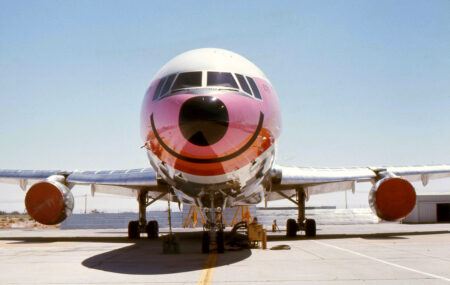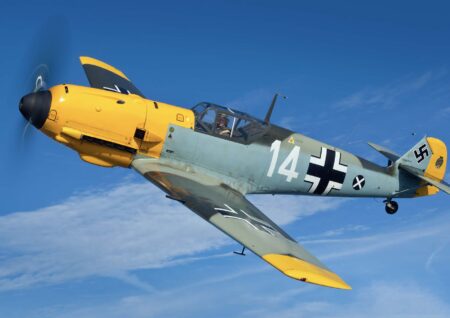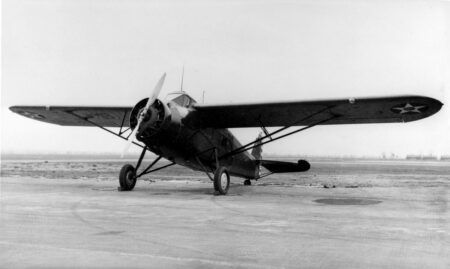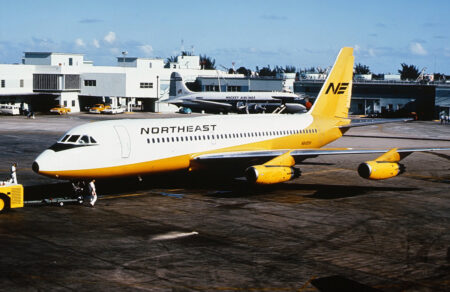


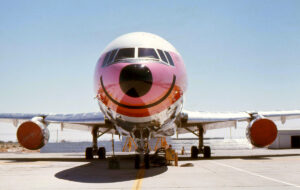


When a passenger approached his departure gate at the dawn of the Jet Age in the early-1960s and noted propellers on his aircraft, he most likely thought, It’s one of those old ones. Propellers were clearly associated with age. Yet they predominantly graced the wings of commuter and regional aircraft for the balance of the 20th century. Were all of these airplanes also just “old ones?”
The Propeller: A Closer Examination
Although commercial aircraft sporting propellers were the standard for airliners until the advent of the Jet Age, their appearance is only skin deep. They were integral parts of both piston and turbine engines, the latter of which employed the same four-stroke air intake, compression, combustion, and exhaust sequence as a pure-jet. But, as a turboprop, the engine itself turned a propeller by means of reduction gear, creating most of the propulsive force. As a result, it has alternatively been called a “prop jet.”
“An aircraft engine is the beating heart of the plane. It’s where the energy is produced,” according to the “About Turboprop Aircraft” description provided by ATR Avions Transort Regional/Aerei da Trasporto Italano, maker of just such aircraft. “In turboprops, the energy is used to rotate a propeller. The air admitted in the engine is compressed to reach optimum pressure and temperature before being burned with fuel in the combustion chamber. The pressure and the speed of hot gases resulting from this combustion provide the force needed to turn the turbines and the shaft, which in turn drives the propeller of the turboprop.”
This type of engine remained the predominant one used by regional aircraft seating between 19 and 50 passengers for at least three decades because of its many advantages.
- The aircraft themselves featured lower gross weights.
- They were more economical to operate.
- They offered short-field performance and could usually operate from unpaved surfaces, such as gravel, grass, sand, snow, and ice.
- They were independent of ground-support facilities like boarding stairs.
- They facilitated short turn-around times of between 10 and 15 minutes.
- They carried sufficient fuel to operate two or more consecutive sectors, further minimizing turn-around times at transit stations.
- They were very efficient at low flight speeds.
- Their block times varied little from those offered by jets on short segments.
- And their capacities, which could be classified as low, medium, and high, catered to routes which generated equal amounts of passenger demand.
“Demand for air service from smaller communities will not be able to support large aircraft; runway limitations at hundreds of airports that will not permit jet operations; and the continuing favorable economics of turboprops on short-haul routes (have ensured that they) remain the backbone of most regional airline networks,” Carole A. Shifrin suggests in her article, “More Small Jets Enter Regional Fleets” (Aviation Week and Space Technology, May 12, 1997).
Low-Capacity Regional Airliners
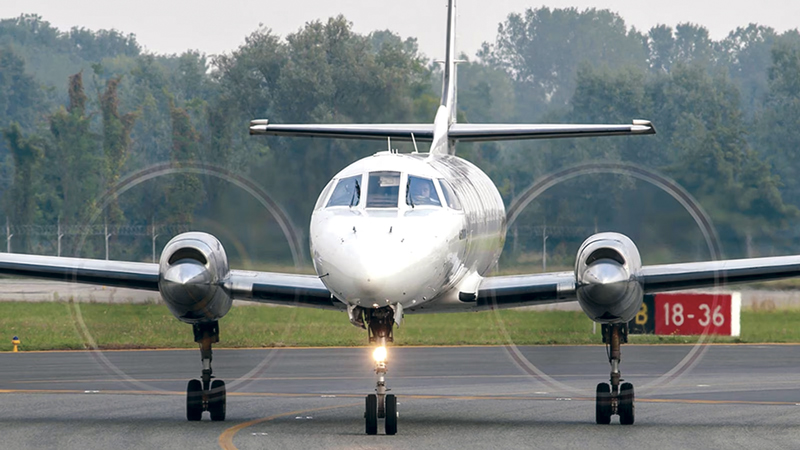
Because aircraft that operate under FAA 14 CFR Part 135 regulations do not require a flight attendant if their capacity does not exceed 19 passengers, those that fall into this category generally featured narrow fuselages and often lacked stand-up aisles.
Two, with long, almost tube-resembling cabins, were the Fairchild Swearengin Metro, which was operated by the likes of Commuter Airlines, Air Wisconsin, and Empire, and the Beechcraft 1900C, which wore the colors of Air Midwest, Big Sky, and Brockway Air, among many others. They enabled carriers such as these to get their starts before progressing to larger equipment as routes matured.
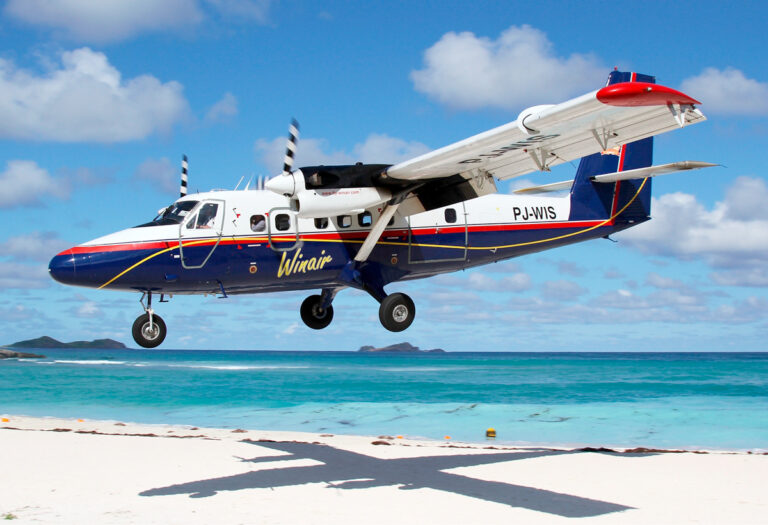
Another aircraft in this class was the de Haviland Canada DHC-6 Twin Otter, whose beauty could only be described as “skin deep.”
“Developed from a long pedigree of sturdy bush designs, such as the Beaver, the Otter, and the Caribou, the DHC-6 Twin Otter turned out to be a real winner,” according to R. E. G. Davies in Airlines of the United States since 1914 (Smithsonian Institution Press, 1988, p. 489). “Although described by one airline president as ‘something the Wright Brothers forgot to finish,’ the alleged ugly duckling appeared to most of the other presidents in quite a different light.”
Rugged, reliable, and simplistic, the high-wing aircraft, powered by two Pratt and Whitney of Canada PT6A turboprops and featuring a non-retractable undercarriage, offered many strengths, the most significant of which was its short takeoff and landing (STOL) capability that enabled it to land on a dime. Because of it, Caribbean-based Winair regularly operated to the 2,100-foot-long runway at Gustaf II Airport on the island of St. Barthelemy, which was tucked into a pocket surrounded either by hills or the ocean. On the other side of the Atlantic, Loganair connected Glasgow with the Scottish island of Barra, routinely making the world’s only landing on a beach—tide permitting.
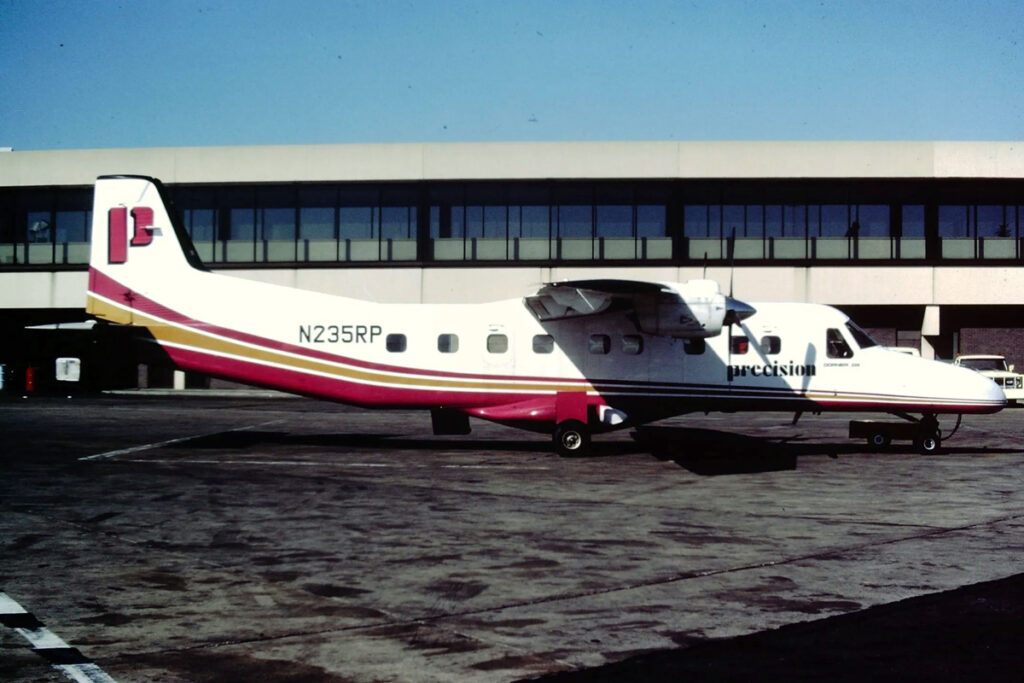
Back in the US, the 19-passenger Dornier Do-228-200, produced in Germany and featuring its own high-mounted wing and twin turboprops, was flown by Precision Airlines, a Northwest Airlink partner.
“Precision, focused on Boston and New York, and serving smaller New England communities with multi-hop flights, started using the Do-228 to replace its smaller Beechcraft in the back half of the 1980s,” according to the Northwest History Center.
Medium-Capacity Regional Airliners
Aircraft in this class generally featured jet-equivalent comfort, consisting of three- or four-abreast seating, stand-up headroom, small galleys and lavatories, cabin pressurization (with the exception of the Shorts 330 and 360), and flight attendant service, and enabled carriers to operate routes on which demand merited their capacity of between 30 and 40 passengers.
Powered by Pratt and Whitney of Canada PW118 turboprops and sporting a t-tail, the Brazilian-made Embraer EMB-120 Brasilia often fed major airline hubs in the U.S. under the Delta Connection, Continental Express, and United Express banners. The type wore the colors of ASA in Atlanta and Comair in Orlando, both Delta Airlines strongholds.
The 34-seat Saab 340, which began as a joint venture with Fairchild—and saw its wings initially produced in a factory at Farmingdale, Long Island’s Republic Airport—was a Business Express, Comair, and Shuttle America workhouse.
Northwest Airlink carriers Express Airlines 1 and Mesaba operated significant numbers of the type.
“At the time of the Delta merger, Mesaba was operating 49 examples of the Saab 340 out of all three Northwest hubs,” according to the Northwest History Center. “As Delta closed the Memphis operation, some of these aircraft even moved to Atlanta to replace ATR72 flights.”
Large-Capacity Regional Airliners
Accommodating 50 or more passengers in considerable, four-abreast comfort, these aircraft mostly included advanced, stretched versions of earlier designs.
The high-wing, Pratt and Whitney of Canada PW125B-powered Fokker 50, for instance, was a longer-fuselage variant based upon the first-generation Fokker F.27 Friendship, and saw widespread service in Europe with the likes of Aer Lingus Commuter, which dubbed it the “nifty fifty,” Air Nostrum of Spain, Air UK, Austrian Air Services, and KLM CityHopper. Icelandair regularly connected Reykjavik’s downtown Airport with Kulusuk in Greenland, touching down on its single gravel air strip after approaching it over fjords and pack ice.
The British Aerospace BAe-ATP Advanced Turbo-Prop was a second-generation, 64- to 72-passenger version of the earlier and smaller Hawker Siddeley HS.748. Its major European operators included BA Citiexpress, British Midland, British Regional, Loganair, Manx Airlines, and West Air of Sweden.
Saab offered the stretched, 50-seat S-2000 powered by Allison AE 2100A engines that drove slow-turning, six-bladed propellers to reduce internal and external noise, and it achieved a maximum cruise speed that was some 100 knots higher than that of the smaller Saab 340 from which it was derived. Crossair of Switzerland was its launch customer.
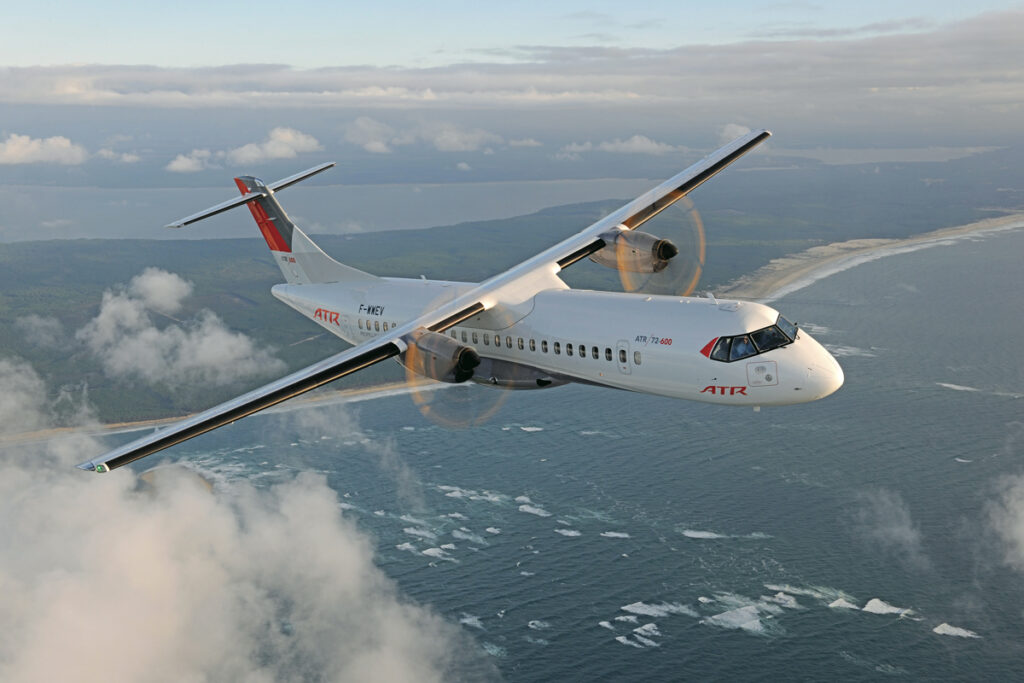
As the ultimate-rendition of the ATR 72, the ATR 72-600 featured the specialized Armonia cabin, created by Italian designer Giugiaro, with a new air management system, lightweight seats, LED lighting, accommodation for up to 78, and provision for inflight Wi-Fi connectivity. The basic ATR72 was the last turboprop regional airliner to remain in American Eagle’s fleet.
Dying Breed
After decades of reliable and economical operation, low-, medium- and high-capacity regional turboprop airliners such as these reached the end of their certified service lives and were progressively replaced by the new breed of regional jets.
“The regional jet allows a carrier to begin new nonstop service to smaller markets, to complement or replace existing mainline jet services, and to complement or replace ‘long-haul’ turboprop service,” according to James Ott in his “Regionals Building at Nation’s Hubs” article (Aviation Week and Space Technology, May 18, 1998).
But, with regional jets built by Bombardier, Dornier, and Embraer, which accommodate between 32 and 100 passengers, and overwhelming customer preference for them, their once-dominant turboprop predecessors had been reduced to a dying breed.
As of 2024, the ATR42 and -72 were the only ones still being produced by their original equipment manufacturer (OEM), although orders had been reduced to a trickle, and no replacements were in sight.