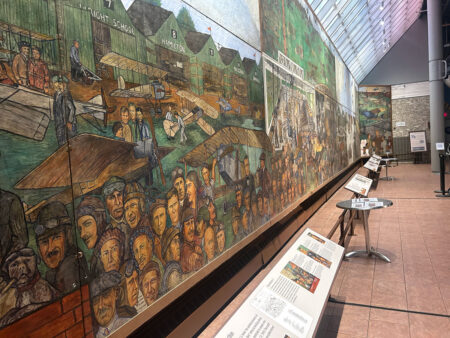




Long Island, with its treeless expanse known as the Hempstead Plains, proximity to Manhattan, and gateway to the country and the European continent by means of the Atlantic Ocean, gave rise to numerous, once-famous aircraft manufacturers, including the American Aeronautical Corporation, the American Airplane and Engine Corporation, Brewster, Burnelli, Columbia, Cox-Klemin, Curtiss, EDO, Fairchild, Grumman, Ireland, the LWF Engineering Company, Loening, Orenco, Ranger, Republic, Sikorsky, Sperry, and Vought. Producing airplanes, powerplants, and components, they built pioneer designs and biplanes during the 1910s and 1920s, introduced significant advancements during the two-decade Golden Age between 1919 and 1939, and churned out military fighters that were considered integral elements in the arsenal of democracy during the Second World War.
Although these East Coast companies were but shadows of those on the West Coast, such as Boeing, Douglas (later McDonnell-Douglas), and Lockheed, which endowed the world with piston, turboprop, pure-jet, and turbofan passenger-carrying airliners, their Long Island counterparts produced a few notable types in this category.
American Airplane and Engine Corporation
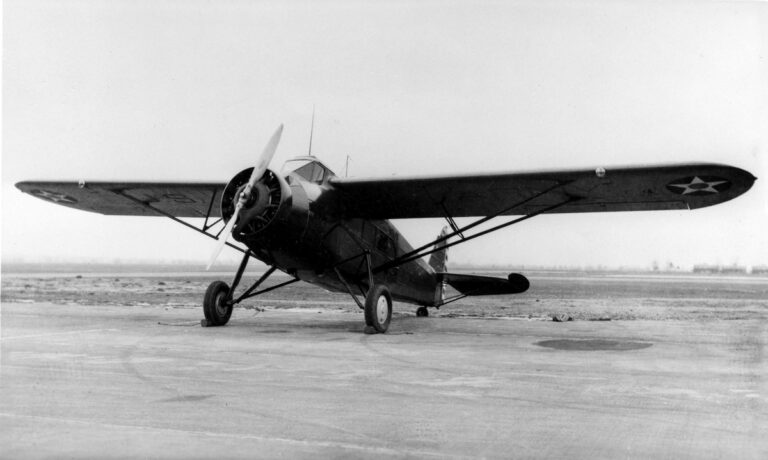
The American Airplane and Engine Corporation’s first–and, in the event, only–airliner was the Pilgrim 100, which was conceptualized by Fairchild, but was subsequently continued by the new company, itself a division of the Aviation Corporation. It planted its roots in the former Fairchild factory at Republic Airport in 1931. It represented, to a degree, the influence an aircraft manufacturer could exert on an airline.
William Littlewood, general manager of the original Fairchild Engine factory, and Myron Gould Beard, a pilot and engineer there, ultimately took up employment at then-named American Airways (now American Airlines). The former’s first significant assignment was to develop specifications for a cost-effective airliner. “Airliner,” then, signified no more than a dozen passengers.
“Out of this assignment came the Pilgrim, the first commercial transport to be designed according to an airline’s specifications,” according to Robert J. Serling in Eagle: The Story of American Airlines (St. Martin’s/Marek, 1985, p. 19). “It was a single-engine plane carrying nine passengers and flown by a single pilot. The cockpit was inaccessible from the cabin; messages to the passengers were passed through a sliding panel in a bulkhead.”
Of the 26 Pilgrims produced, American operated 22 100As and 100Bs, and the US Army Air Corps flew four designated Y1C-24, employing them on light cargo and supply missions.
Burnelli
Only a pair of very unique aircraft emerged from the workshop of Vincent J. Burnelli, who flew two gliders before taking root in Amityville in 1920. But they reflected his advanced design philosophy.
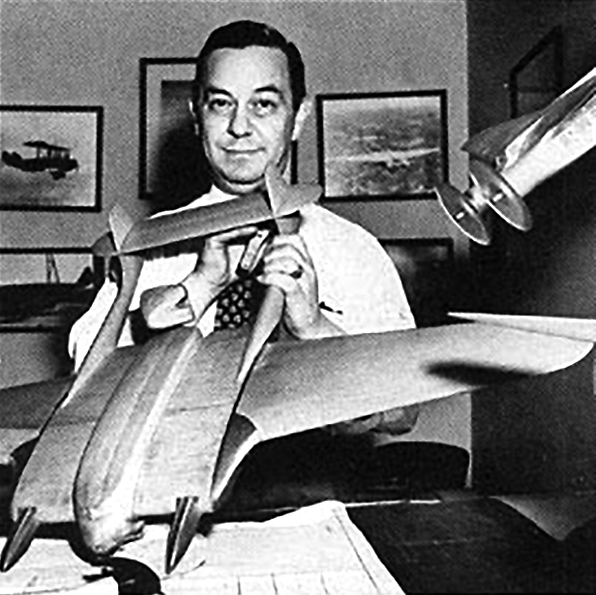
Aside from serving as the common attachment point for its aerodynamic surfaces and the load-carrying location of its pilot, passengers, and cargo, a fuselage, he believed, needed to compensate for some of its drag by augmenting lift, leading him to create a camber-incorporating, airfoil-shaped lifting body.
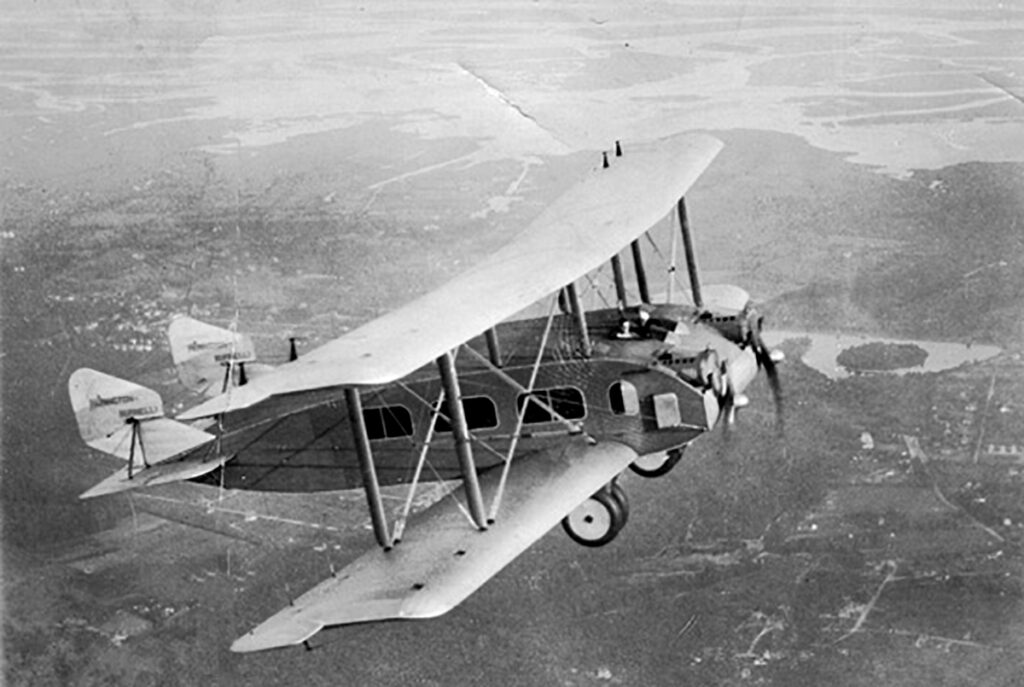
Featuring a plywood frame covered in duralumin, it had a 14-foot-wide, slab-sided shape, with upper and lower curvatures that tapered to a knife-like edge at its rear. But its 504-square-foot surface produced almost a third of its lift, and its width facilitated the installation of two side-by-side, nose-mounted, 400-hp liquid-cooled Liberty XII V-12 piston engines. Internally, a cavernous cabin accommodated up to 30 passengers or oversized cargo.
Because of its size, it continued its “two-of-everything” design theme with its wings, its upper and lower, unstaggered biplanes respectively possessing 735 and 588 square-foot areas; with its small, fuselage side-mounted twin fins provisioned with balanced rudders; and with the two horizontal stabilizers, which equally sported balanced elevators.
Designated RB-1, for “Remington-Burnelli,” it first flew from Curtiss Field on June 2, 1921, but the damage it sustained from a storm while on the ground led to its improved RB-2 successor of 1924.
Although it introduced a considerable number of advanced features, it was slow and sluggish, and failed to attract the necessary funding for the development that could have led to the RB-3.
Curtiss Aeroplane and Motor Company
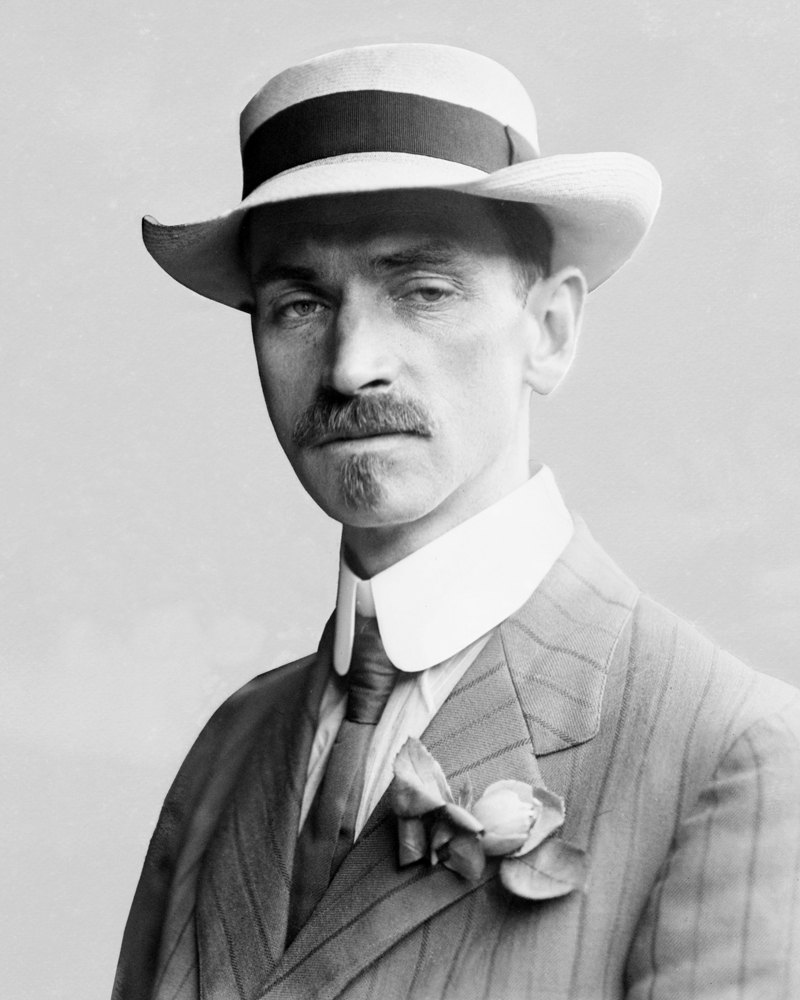
The Curtiss Aeroplane and Motor Company, reflecting the name of its founder, Glenn Hammond Curtiss, produced a handful of passenger-carrying transports on Long Island, after it established a research and development facility there in 1918.
Of significant notoriety was the Curtiss Condor airliner, of which there were two major versions. Both represented transitional technology, serving as bridges between the bi- and monoplane, examples of the latter including the Boeing 247 and the Douglas DC-2.
“In most respects, (the Condor) was a step backward in aircraft design—a twin-engine biplane whose forest of struts and wires provided built-in headwinds,” Serling commented (op. cit., p. 55).
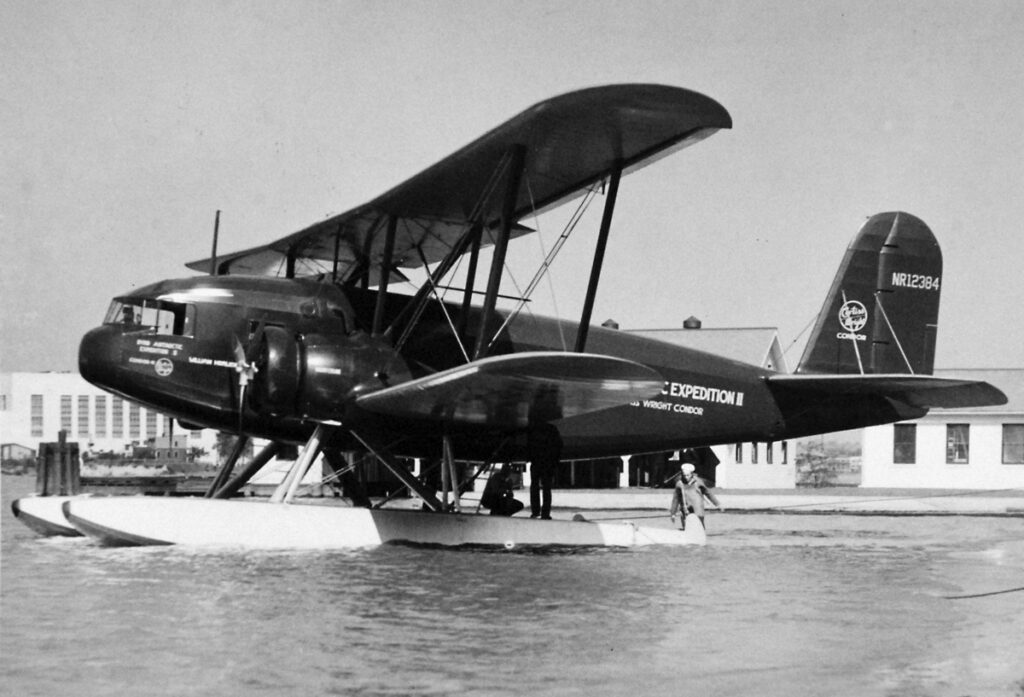
Eastern Air Transport inaugurated a New York-Miami through-service with the initial Model 18, which featured twin horizontal stabilizers, on January 7, 1933, funneling winter-weary passengers to Florida’s sunbaked beaches. It was also operated by National Air Transport.
Advancement took root in the succeeding Model 32. Powered by two 710-hp, nine-cylinder Wright SCR-1820-F3 radials, whose vibrations often propagated through the cabin like a tuning fork, the Condor II accommodated 15-day or 12-night-berth passengers, who were attended to by a then-called “stewardess.”
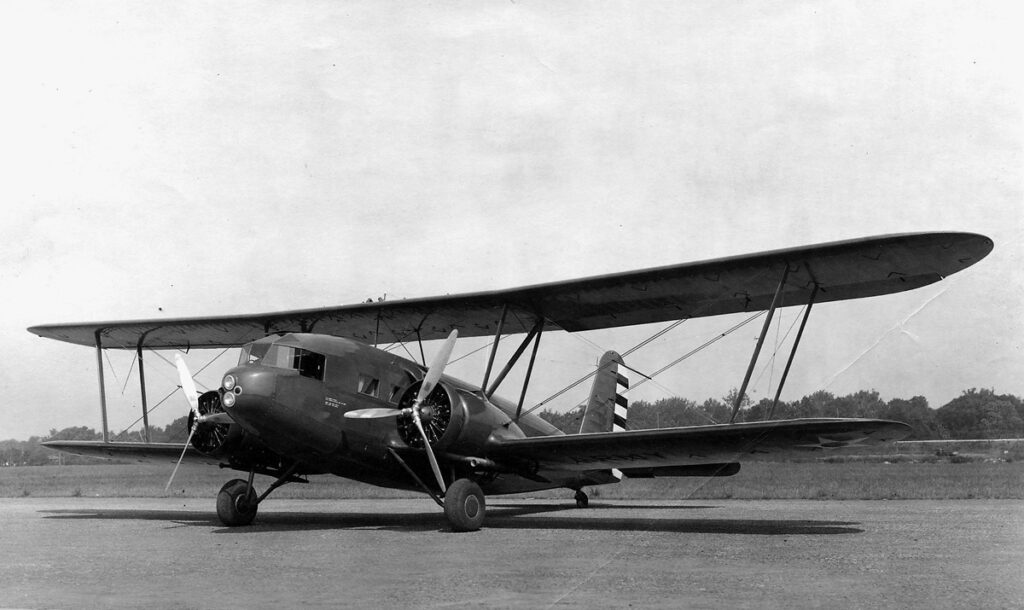
Although it was slow and lumbering and clung, like an airplane that could not relinquish its biplane past, to the features that categorized it, it was considered the first sleeper transport, whose comfort emulated the railroad’s Pullman berths, a necessity on long, cross-country stretches.
Fairchild Aircraft Company
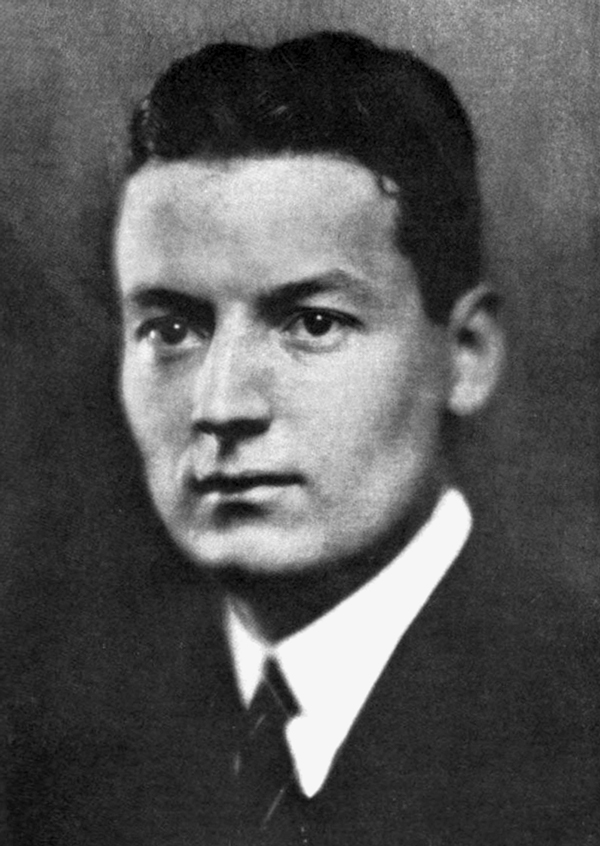
Founded by Sherman Mills Fairchild, the Farmingdale-based Fairchild Aircraft Company arose from the need to design a suitable aerial platform that was both stable and possessed sufficient internal space from which to capture shots with the photographic equipment he designed and built during the 1920s. Since none of the existing airframes were appropriate enough, he created his own, which took form as the FC-1.
It’s longer, light transport FC-2, powered by a 220-hp Wright J-5 Whirlwind, proved both rugged and flexible, operating many missions within diverse geographic and climactic regions, flying in Canada, in the jungles and mountains of South America, and in the bottom-of-the-world, ice-capped Antarctic continent.
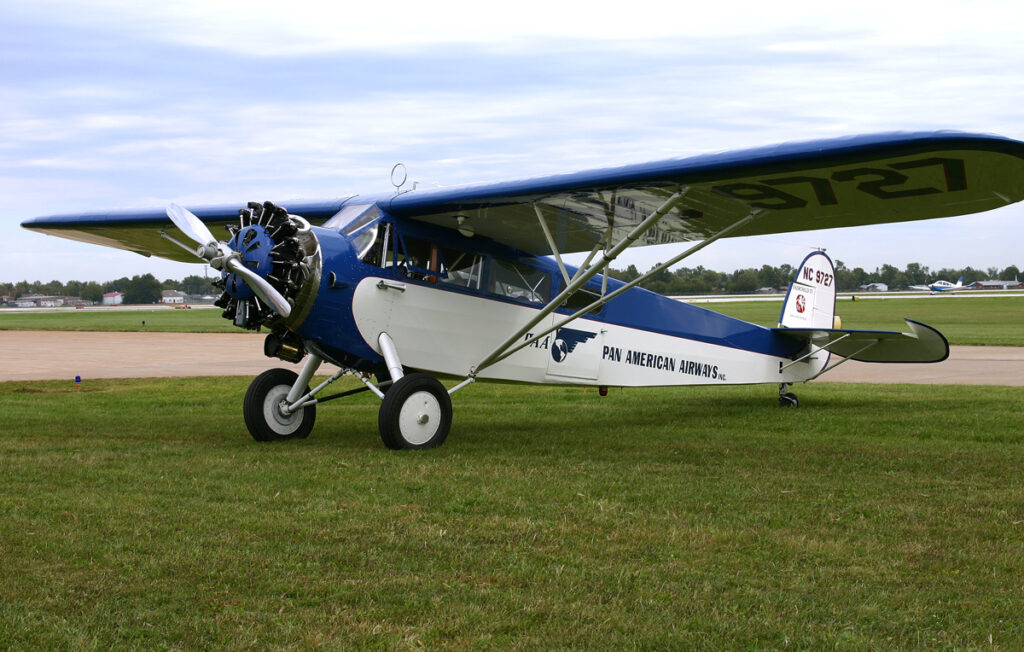
It enabled Pan American, only by chance, to operate the Key West-Havana international airmail contract it had been awarded on July 16, 1927. To avoid losing it by failing to do so by the October 19 target, which would have occurred because of the late delivery of the two Fokker F.VIIs it had otherwise ordered for the service, it chartered a float-equipped example, operating a delivery flight to West Indian Aerial Express and named “La Nina.” Loaded with seven 25-pound sacks collectively carrying 30,000 letters transferred from the Florida East Coast-Atlantic Coast Railroad’s “Havana Special” run, it made the one-hour flight from Key West, landing in Havana at 09:25 on the October 19 deadline date.
The ultimate evolution of the FC-2—and the best-selling of the version, with 200 built—was the Fairchild 71. Powered by a Pratt and Whitney nine-cylinder Wasp radial engine, it accommodated nine passengers and had a 900-mile range.
Suitable for light-transport and airliner service, it was operated by Compania Mexicana de Aviacion, which inaugurated it into service on a Mexico City-Tampico route on April 15, 1928.
Sikorsky Aero Engineering Corporation
Igor I. Sikorsky immigrated from Russia to the US, arriving on American shores with dreams, drives, and aeronautic blood coursing through his veins, but little more than lint in his pockets.
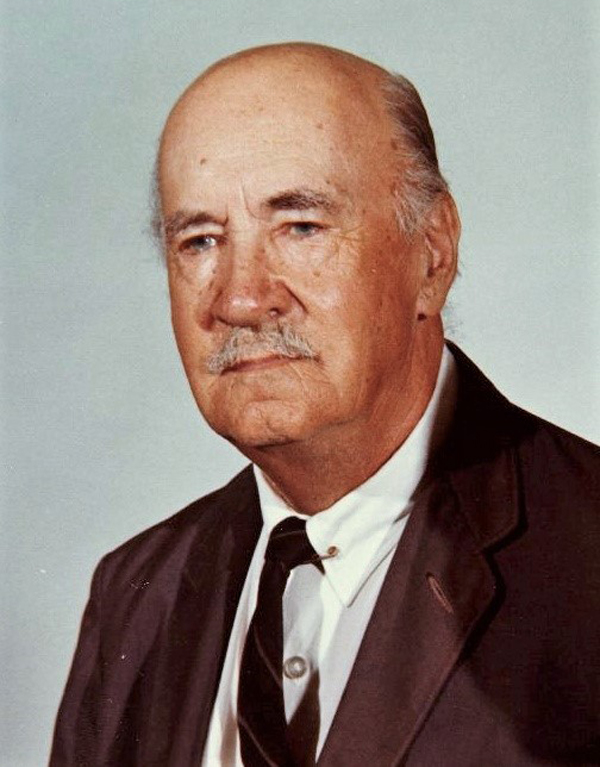
Five years after stepping ashore on this side of the Atlantic, in 1924, he planted Long Island roots that grew into the Sikorsky Aero Engineering Corporation and in it concentrated on one of the two aircraft types with which he would become synonymous—the amphibious flying boat, with the other being the rotary-wing helicopter.
Although the first of the former, the S-34, nosed into Long Island Sound near College Point on May 31, 1927, after one of its two engines failed at 800 feet, the succeeding S-38, the theoretical second designed between May and July of the following year, fared far better. Functional, it was. Art, it was not.
It combined an aquatic and aerodynamic “structure” that displayed the decidedly separate, but somehow connected, aspects needed to operate in both realms: a short, hull-shaped fuselage and a high, straight wing, V-strut attached to the smaller, lower, hull-extending one. From the upper wing were slung two Pratt and Whitney Wasp radials and from its trailing edge, twin booms that ended at the tailplane itself.
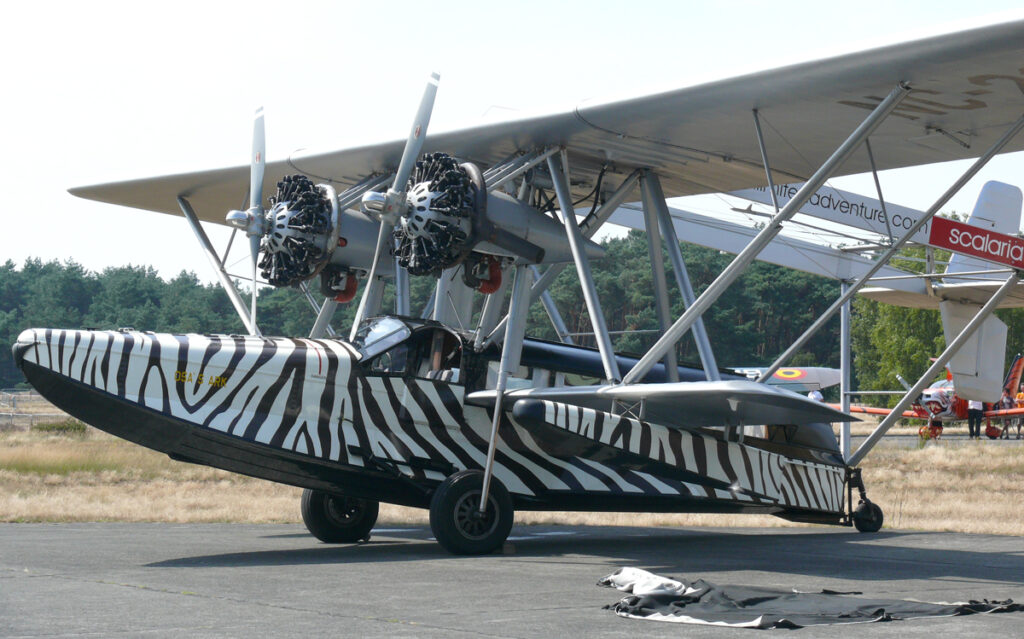
“While considered an ugly duckling by some, it quickly proved to be one of the most efficient and practical airplanes of its time,” according to “The Pan Am Connection” article in the June 2000 issue of the Sikorsky Archives News. “A Navy test pilot of the time called it a better ship than any other of its size and power.” It saw considerable airline service.
Because of its capability, it was instrumental in Pan American’s Caribbean, Central American, and South American route development, beginning with its October 13, 1928, operation. Airfield shortage proved no obstacle. As Andre Priester, its chief engineer, pointed out, “Flying boats carried their own airports on their bottom.” Pan American ultimately operated 38 of the 111 produced.