

If you have found yourself traveling on a plane more often than before, you are not alone. The rise of global travel continues to increase year-over-year, with travelers not only becoming frequent flyers but also taking longer and more frequent trips. In fact, the U.S. Travel Association revealed that air travel increased by 6% from the past year, with a 24% increase in foreign visits. As airlines struggle to meet the ever-increasing demands of passengers, they also face the challenges of high interest rates, staffing shortages, and rising operational costs.
Despite these obstacles, airlines remain dedicated to providing quality comfort and safety. With Boeing’s recent series of high-profile incidents, it is critical for companies to face their safety challenges head-on to maintain passenger trust and set the airline apart from its competitors.
Creating a more secure and satisfying trip requires a focus on the human element—ensuring a human-centric design that empowers seamless travel. This article looks into the value of human-focused design, diving into the importance of seating, cabin pressure, lighting and temperature.
Airplane Seating Design: A Staple of Travel and Comfort
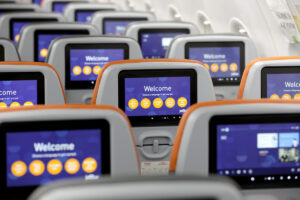
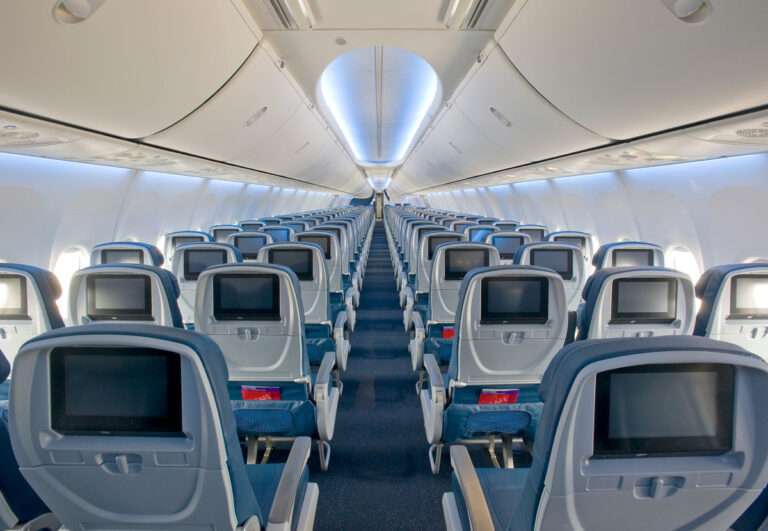
One of the most critical factors of ergonomic design, seating has a significant impact on passenger safety, health, and comfort. Flights can be long, and most of the trip is spent sitting down and waiting to arrive at your destination. According to TRTL, 84% of flyers in the UK have stated that plane seats are uncomfortable to sit in.
Outdated seat standards regarding passengers’ size and weight place their safety, health, and comfort at risk. While the average human body has evolved over the years, the Federal Aviation Administration’s (FAA) recommendation for adequate seat size has not changed since 1994—remarkably, 30 years ago.
This also becomes critical in emergency evacuation situations. Tighter seat spacing and more densely packed passengers can slow the time taken to evacuate the plane, ultimately putting everyone in danger.
Similarly, outdated standards are passenger seat belts. They are required to be designed for a maximum weight of 170 pounds. This fails to account for the 70% of males and 42% of females who weigh more than 170 pounds—suggesting that a significant amount of air travelers are not properly protected.
To combat these issues, HFES has made multiple recommendations to the FAA, encouraging them to consider more modern passenger body types when creating their standards. This includes:
- Requiring seat widths and seat belts that accommodate 95% of the general population.
- Mandating a minimum seat pitch to accommodate the seated high of 95% of the general population to lower the risk of head strikes.
- Specify the inclusion of footrests and adjustable lumbar supports to reduce potential neck and back injuries.
- Incorporate updates on the range of variations of US adult body sizes, physical capabilities, and changes in seating configurations for emergency evacuation.
With most passengers’ time spent seated on the flight, an ergonomic seat is a cornerstone of a comfortable journey. Poor designs lead to injury, and with the uptick of flyers and for longer periods of time, this means more risk. Implementing these recommendations would enhance the overall passenger experience, with conditions designed to meet human needs.
Cabin Pressure, Temperature, and Lighting: Enhancing the Overall Experience
Of course, seating is not the only element of air travel that plays a key role in ergonomic design. With passengers elevated thousands of feet in the air for longer periods of time, the overall environment should accommodate their comfort.
Consider conditions such as cabin air pressure—something slight that people may overlook. While not always contributing to immediate discomfort, reduced cabin air pressure can lead to poor circulation for passengers. Long flights with little leg movement can impede blood circulation overall. In worse-case scenarios, it poses the risk of deep vein thrombosis, a condition where blood clots form in the deep veins, most likely in the legs.
To combat these risks, airlines should proactively provide information on how to have good posture on the slight, as well as provide blankets, pillows and cushions for any additional support.
Lighting and temperature also play a significant role in enhancing comfortability. If you have ever been on a plane and it is too hot or too cold, you have probably immediately noticed. Outside of that instant displeasure, uncomfortable temperatures can disrupt sleep, cause stress, worsen chronic conditions or even increase the risk of respiratory infection.
The inclusion of fan and reading lights may seem like a simple staple, but overall provide customizable options for passenger well-being.
Flying Forward
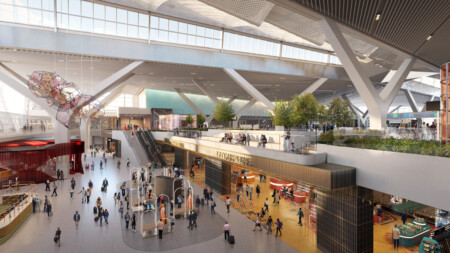
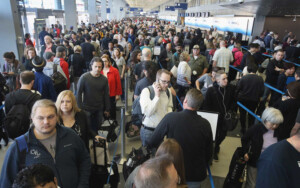
As travelers continue their journeys across the globe, it is up to airlines to continue putting human-centric design at the forefront of their airplanes. Airlines need to consider the airplane experience and the entire airline experience, including check-in, baggage claim, walk distances, amenities, and services, as well as lounge and waiting areas.
Airlines should continue to improve the overall experience during the renovation and new airport design process. By considering the ergonomics of seating and the overall flying environment, passengers will feel not only safe but also satisfied—building trust, loyalty, and a positive travel experience.